

Relieve Pain.Restore Motion.Reclaim Life.
Spinal Decompression of NYC provides advanced, non-surgical spinal decompression therapy designed to relieve pain, restore movement, and improve your quality of life.
Why It’s Different; A smarter way to move beyond pain.
Our approach focuses on targeted, non-surgical care designed around your symptoms, goals, and daily life.
NON-SURGICAL SOLUTION
A conservative approach for people exploring options before surgery or medication.
TARGETS THE ROOT CAUSE
Controlled traction is designed to reduce pressure on discs and irritated spinal structures.
IMPROVES MOBILITY & FUNCTION
The goal is to help restore movement, flexibility, and everyday activity.
FAST SESSIONS, LASTING RESULTS
Comfortable treatment sessions are designed to fit into real life and your individual care plan.
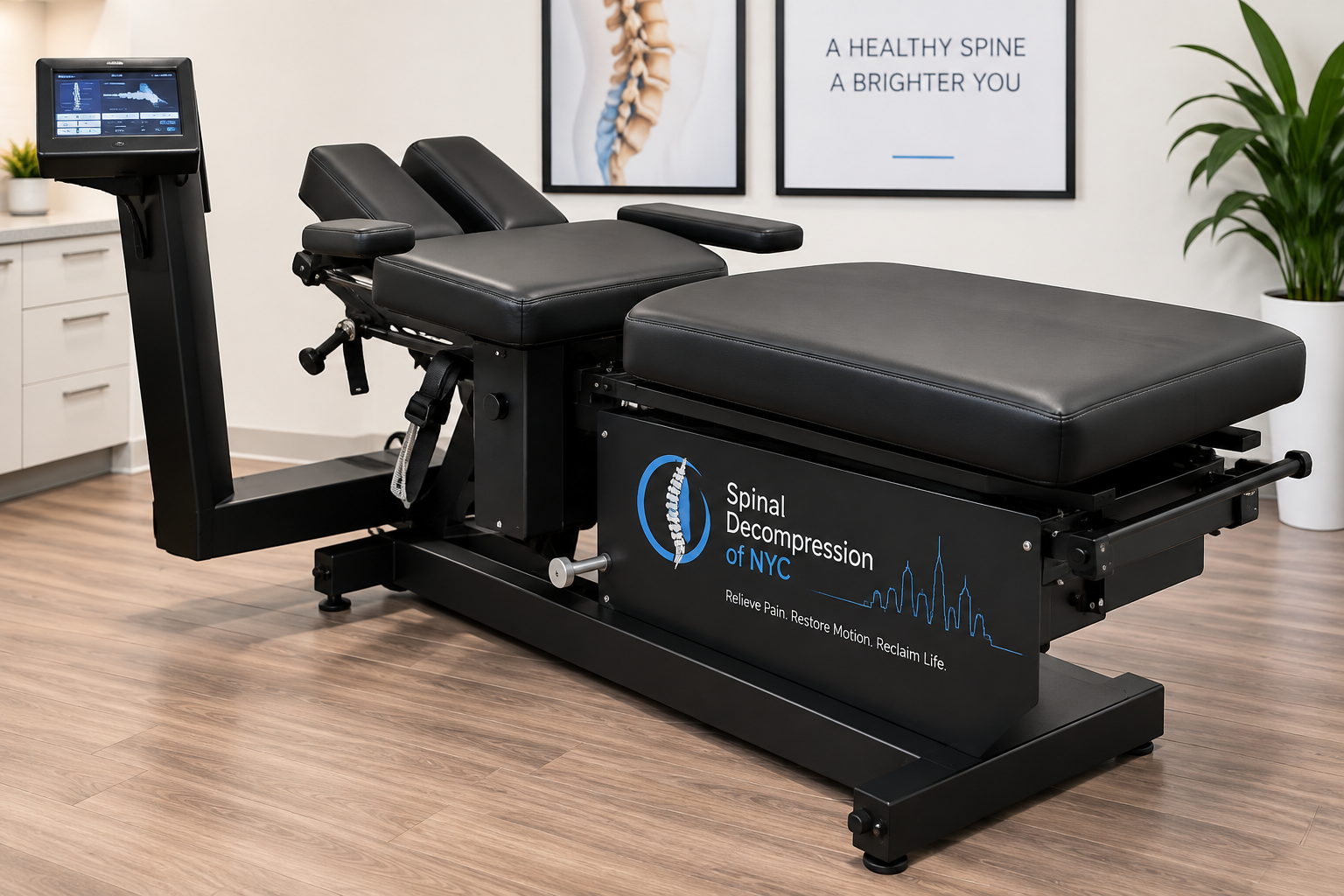
Advanced Spinal Decompression Therapy
Our state-of-the-art spinal decompression therapy is a safe, non-invasive option that may be considered for selected patients with disc-related and spinal conditions.
We Can Help With
Depending on your individual evaluation, spinal decompression may be discussed as part of a broader conservative care plan for certain spinal and disc-related conditions.
Ready to Feel Better?
Start with an individualized consultation to understand your symptoms, your options, and whether non-surgical spinal decompression may be appropriate for you.
SPINAL DECOMPRESSION OF NYC
Non-Surgical Spinal Decompression Therapy in New York City
Back, neck, and radiating pain can interfere with work, sleep, and everyday life. At Spinal Decompression of NYC, we provide evaluation-centered care for people exploring non-surgical options for certain spinal and disc-related conditions. Our goal is to understand your symptoms, explain your options, and help you make an informed decision about care.
What is spinal decompression?
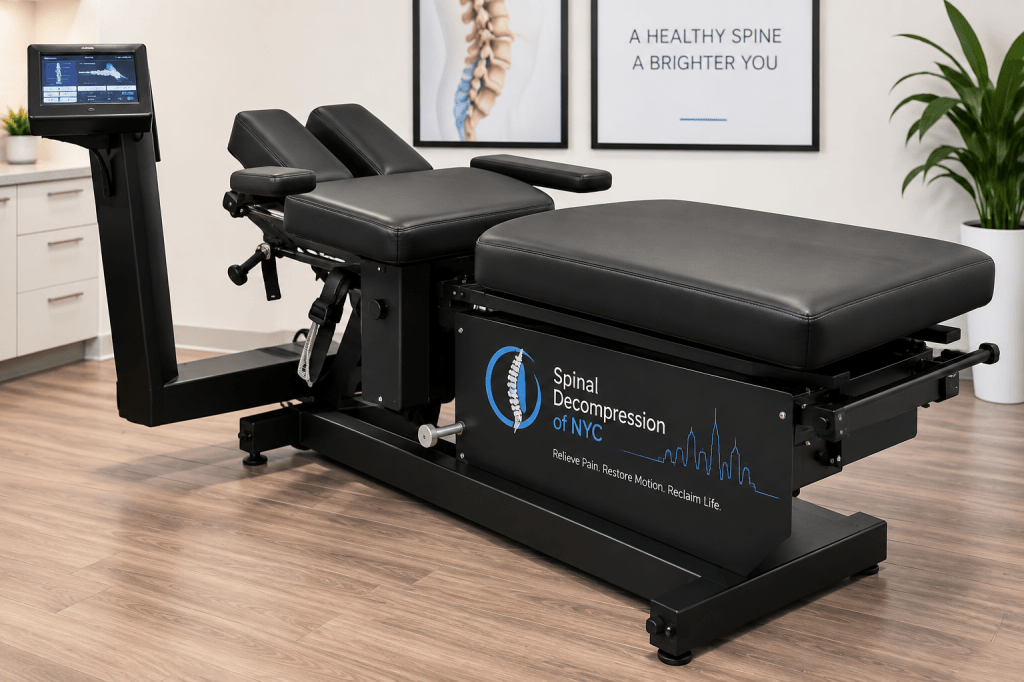
Non-surgical spinal decompression is a form of motorized, controlled traction used in selected cases involving the spine. Treatment is typically delivered on a specialized table, with positioning and force tailored to the individual. It may be considered as one part of a broader conservative care plan—not a guaranteed solution or a replacement for a proper medical evaluation.
A personalized approach
Spinal symptoms can have different causes, even when they feel similar. A consultation helps review your history, symptoms, relevant imaging if available, and previous care. Recommendations depend on those findings, your health, and whether decompression is an appropriate option for you.
Conditions we evaluate
People searching for herniated disc treatment in NYC, sciatica care, or non-surgical options for neck and lower back pain may have a range of underlying conditions. Depending on an individual evaluation, spinal decompression may be discussed as part of care for some patients with:
Herniated or bulging discs
Disc changes that may contribute to localized pain or symptoms extending into an arm or leg.
Sciatica
Pain, tingling, or other symptoms traveling along the sciatic nerve pathway.
Lumbar radiculopathy
Irritation or compression involving nerves in the lower back that may cause leg symptoms.
Cervical radiculopathy
Neck-related nerve symptoms that may radiate into the shoulder, arm, or hand.
Degenerative disc disease
Age- or wear-related disc changes that may be associated with neck or back discomfort.
Spinal stenosis or facet-related pain
Conditions that require careful assessment to determine suitable treatment options.
Persistent or post-surgical back pain
Ongoing symptoms that warrant individualized review and, when appropriate, coordination with other treating clinicians.
Not every condition—or every person with a listed diagnosis—is a candidate for spinal decompression. The cause and severity of symptoms, medical history, and other factors matter.
Lumbar spinal decompression
Lumbar decompression focuses on the lower back. For selected patients, it may be considered when symptoms involve the lumbar discs or radiate into the buttock or leg. A clinical evaluation is important because lower back pain and sciatica can arise from several different causes.
Cervical spinal decompression
Cervical decompression focuses on the neck. It may be discussed for certain patients with neck discomfort or symptoms extending toward the shoulder, arm, or hand. The appropriate approach depends on the diagnosis and individual safety considerations.
What to expect at a consultation
- Discuss your symptoms, when they began, and how they affect daily activities.
- Review relevant health history, prior treatment, and imaging reports when available.
- Discuss whether non-surgical spinal decompression or another approach may be appropriate.
- Review the proposed plan, expected course, potential limitations, and any questions before proceeding.
Spinal decompression FAQs
Is non-surgical spinal decompression right for everyone?
No. Suitability depends on the diagnosis, symptoms, medical history, and other clinical considerations. An evaluation is needed before determining whether it belongs in your care plan.
Can spinal decompression help a herniated disc or sciatica?
It may be considered for some patients with certain disc-related or radiating symptoms. Results vary, and these symptoms can have causes that require different treatments. Your clinician can discuss options after evaluating you.
What is the difference between cervical and lumbar decompression?
Cervical decompression addresses the neck; lumbar decompression addresses the lower back. Positioning and treatment parameters differ, and the appropriate method depends on the area being evaluated and the individual patient.
Do I need an MRI before an appointment?
Not necessarily. Bring any relevant imaging reports or records you already have. During your consultation, the clinician can determine whether additional evaluation or imaging is appropriate.
Does spinal decompression guarantee pain relief or avoid surgery?
No treatment can guarantee a particular outcome. Spinal decompression is a non-surgical option that may be appropriate for selected patients; it does not replace necessary medical or surgical care.
Explore your options for spine care in NYC
If you are researching spinal decompression in New York City for back pain, neck pain, sciatica, or a disc-related condition, start with an individualized consultation.
Educational information only; not a diagnosis or a guarantee of treatment results. Individual recommendations require clinical evaluation.

SOLUTION
ROOT CAUSE
FUNCTION
LASTING RESULTS

OUR TREATMENT
Advanced Spinal
Decompression Therapy
Our state-of-the-art spinal decompression therapy is a safe, effective solution for herniated discs, sciatica, chronic back and neck pain, and more.
CONDITIONS WE TREAT
We Can Help With
 Herniated
Discs
 Sciatica
 Neck Pain
 Lower Back
Pain
 Spinal
Stenosis
 Degenerative
Disc Disease
Spinal Decompression of NYC
Non-Surgical Spinal Decompression Therapy in New York City
Back, neck, and radiating pain can interfere with work, sleep, and everyday life. At Spinal Decompression of NYC, we provide evaluation-centered care for people exploring non-surgical options for certain spinal and disc-related conditions. Our goal is to understand your symptoms, explain your options, and help you make an informed decision about care.
What is spinal decompression?
Non-surgical spinal decompression is a form of motorized, controlled traction used in selected cases involving the spine. Treatment is typically delivered on a specialized table, with positioning and force tailored to the individual. It may be considered as one part of a broader conservative care plan—not a guaranteed solution or a replacement for a proper medical evaluation.
A personalized approach
Spinal symptoms can have different causes, even when they feel similar. A consultation helps review your history, symptoms, relevant imaging if available, and previous care. Recommendations depend on those findings, your health, and whether decompression is an appropriate option for you.
Conditions we evaluate
People searching for herniated disc treatment in NYC, sciatica care, or non-surgical options for neck and lower back pain may have a range of underlying conditions. Depending on an individual evaluation, spinal decompression may be discussed as part of care for some patients with:
Not every condition—or every person with a listed diagnosis—is a candidate for spinal decompression. The cause and severity of symptoms, medical history, and other factors matter.
Lumbar spinal decompression
Lumbar decompression focuses on the lower back. For selected patients, it may be considered when symptoms involve the lumbar discs or radiate into the buttock or leg. A clinical evaluation is important because lower back pain and sciatica can arise from several different causes.
Cervical spinal decompression
Cervical decompression focuses on the neck. It may be discussed for certain patients with neck discomfort or symptoms extending toward the shoulder, arm, or hand. The appropriate approach depends on the diagnosis and individual safety considerations.
What to expect at a consultation
- Discuss your symptoms, when they began, and how they affect daily activities.
- Review relevant health history, prior treatment, and imaging reports when available.
- Discuss whether non-surgical spinal decompression or another approach may be appropriate.
- Review the proposed plan, expected course, potential limitations, and any questions before proceeding.
Spinal decompression FAQs
Is non-surgical spinal decompression right for everyone?
No. Suitability depends on the diagnosis, symptoms, medical history, and other clinical considerations. An evaluation is needed before determining whether it belongs in your care plan.
Can spinal decompression help a herniated disc or sciatica?
It may be considered for some patients with certain disc-related or radiating symptoms. Results vary, and these symptoms can have causes that require different treatments. Your clinician can discuss options after evaluating you.
What is the difference between cervical and lumbar decompression?
Cervical decompression addresses the neck; lumbar decompression addresses the lower back. Positioning and treatment parameters differ, and the appropriate method depends on the area being evaluated and the individual patient.
Do I need an MRI before an appointment?
Not necessarily. Bring any relevant imaging reports or records you already have. During your consultation, the clinician can determine whether additional evaluation or imaging is appropriate.
Does spinal decompression guarantee pain relief or avoid surgery?
No treatment can guarantee a particular outcome. Spinal decompression is a non-surgical option that may be appropriate for selected patients; it does not replace necessary medical or surgical care.
Explore your options for spine care in NYC
If you are researching spinal decompression in New York City for back pain, neck pain, sciatica, or a disc-related condition, start with an individualized consultation.
Educational information only; not a diagnosis or a guarantee of treatment results. Individual recommendations require clinical evaluation.

