

Spinal Decompression of NYC
Our Treatments
Non-Surgical Solutions. Personalized Care.
A thoughtful approach to spinal disc-related pain, built around your symptoms, goals, and individual evaluation.
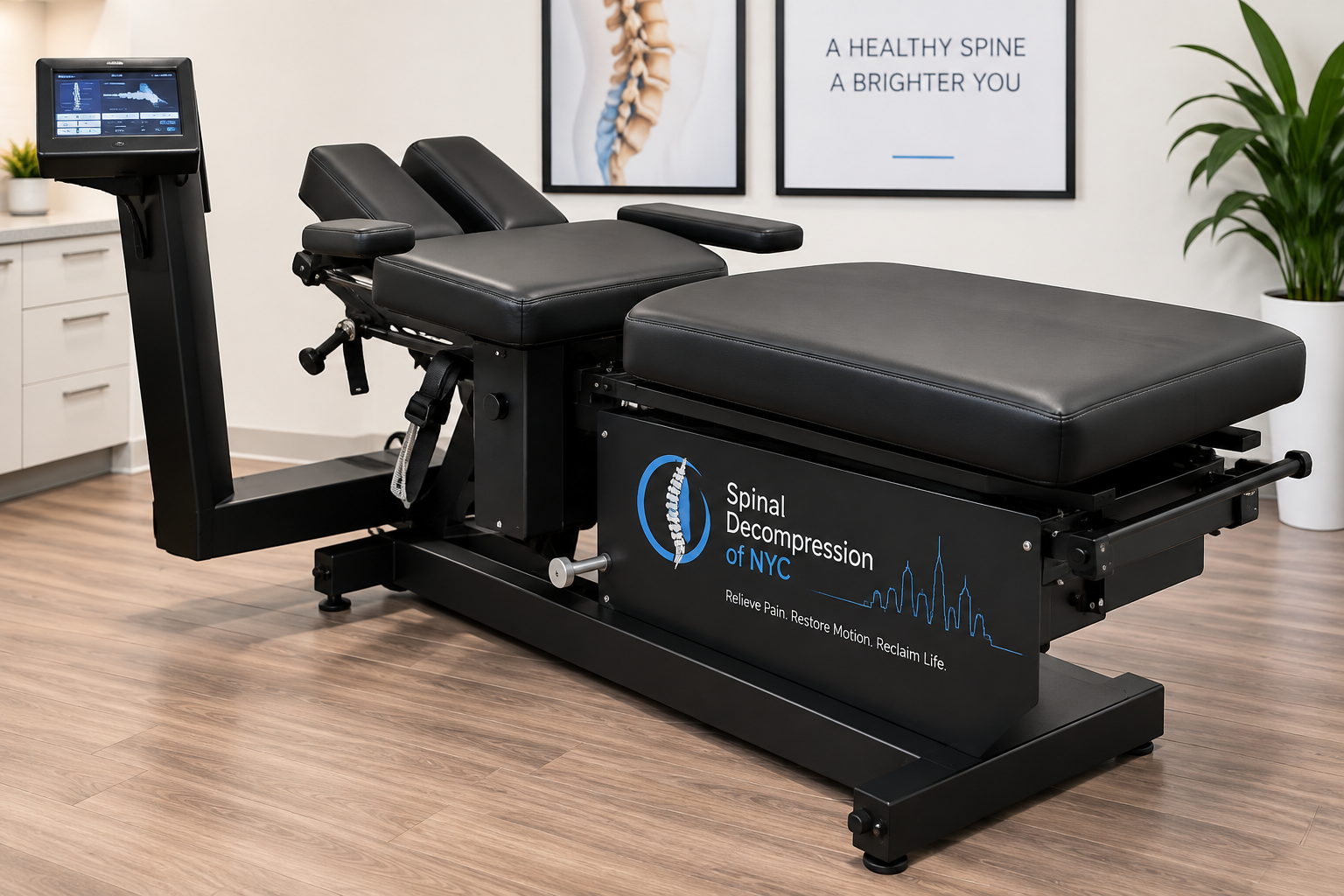
Our Treatment
Advanced Spinal Decompression Therapy
Our state-of-the-art spinal decompression therapy is a non-surgical option for selected patients with disc-related back or neck pain. Care is tailored to your symptoms, examination findings, and individual goals.
- Personalized treatment recommendations
- Computer-controlled, adjustable traction
- Comfort-focused sessions and ongoing reassessment
- Conservative care with no surgery or incisions
A Conservative Approach to Spine Care
When back or neck pain interferes with daily life, understanding your options is an important first step. Our focus is on evaluating the source of your symptoms and determining whether non-surgical spinal decompression may be appropriate for you.
Explore Our Treatment Approach
Non-Surgical Spinal Decompression
Spinal decompression uses a computer-controlled table to apply carefully guided, intermittent traction to targeted areas of the spine. For selected patients, this approach may help reduce mechanical stress on affected discs and ease related symptoms.
Targeted, Individualized Care
Treatment settings and positioning are selected with your symptoms, examination findings, and tolerance in mind. The goal is a plan tailored to you, not a one-size-fits-all protocol.
Comprehensive Evaluation
Your consultation includes a review of your health history and symptoms, a clinical examination, and consideration of relevant imaging when available. We discuss whether decompression is suitable or whether another approach is more appropriate.
Progress-Based Planning
Your response to care is important. We can reassess symptoms, function, and tolerance along the way, and adjust recommendations as clinically appropriate.
How Does Spinal Decompression Work?
During a session, you are positioned on a specialized decompression table. A controlled pulling force is applied and released in cycles, with positioning and settings selected for the area being treated. The process is designed to be gradual and adjustable, rather than forceful stretching.
Spinal decompression is not appropriate for every diagnosis or every patient. Its potential benefits and limitations should be discussed in the context of your individual clinical findings.
What to Expect
Consultation
Discuss your concerns, symptoms, health history, and goals.
Clinical Assessment
Review examination findings and relevant imaging, if available, to help determine candidacy.
Personalized Recommendations
Review the proposed approach, expected course, alternatives, and questions before beginning care.
Ongoing Reassessment
Track how you respond and revisit the plan when needed.
Who May Be a Candidate?
Some people with disc-related back or neck pain, including certain cases involving bulging or herniated discs or radiating symptoms, may be considered for decompression after a thorough evaluation. A diagnosis alone does not establish candidacy, and results vary.
Spinal decompression may not be suitable for people with certain fractures, significant spinal instability, some surgical hardware or recent procedures, pregnancy, or other medical concerns. Your clinician will screen for factors that could make treatment inappropriate.
Ready to Feel Better?
Take the first step toward understanding your options. Schedule a consultation to discuss whether spinal decompression may be right for you.
Schedule Your ConsultationInformation on this page is educational and is not a substitute for individualized medical advice, diagnosis, or treatment. No specific outcome is guaranteed. Care recommendations depend on a clinical evaluation.

